
Sri Lankan Mango · Mangifera indica
Mangocultivar, maturity and destination come first.
Sri Lankan mango for buyers sourcing fresh whole fruit — with cultivar, physiological maturity, size/count, external and internal condition, residue controls, pack-out, phytosanitary route and destination defined before quotation.
A fresh-fruit sourcing route that uses Sri Lanka's official crop references without turning variety, harvest window, Brix, shelf life, stock or export eligibility into unsupported catalogue promises.


01 · Define the commercial route
Fresh fruit first.Pack-out follows the market.
The catalogue focuses on fresh whole mango. Buyer-defined pack-out and processing enquiries are kept separate so the fresh-fruit specification stays clear.

Fresh whole mango
Fresh export fruit is specified by verified cultivar, physiological maturity, size/count or weight band, external condition, permitted defects, residues, packing and destination plant-health requirements.

Buyer-defined pack-out
Commercial pack-out can be defined by count, weight range, class/tolerance, carton configuration, fruit protection and pallet pattern. Feasibility is checked against the actual cultivar, crop and packhouse route.

Processing-route enquiry
Fruit intended for pulp, puree, juice, dried mango or other processing requires a separate raw-material and processor specification. No processed-mango availability is implied by this fresh-fruit page.
Exact cultivar, maturity, pack-out, harvest timing and processing capability are verified per enquiry.
02 · Sri Lankan crop context
Mangifera indica.Variety is part of the specification.
Sri Lanka's Department of Agriculture identifies mango as Mangifera indica and lists recommended cultivars for different agro-ecological zones.
Karthacolomban, TOM EJC and several other named varieties are official crop references, but current export availability still depends on the orchard/source, harvest window, maturity and destination route.
Department of Agriculture · Mango
03 · Variety & standards reference
Use official crop references.Then verify the lot.
Sri Lanka's crop references and Codex CXS 184-1993 provide the framework; maturity, size, Brix, appearance and pack-out still have to be tied to the actual cultivar and programme.
Codex CXS 184-1993 is the current fresh-mango commodity reference. It is not used here to invent a fixed CeyLanka cultivar, Brix, shelf life, harvest season or export grade.
Codex · CXS 184-199304 · Orchard, maturity & route control
Origin alone is not export clearance.The field and destination matter.
For mango, orchard/source status, harvest maturity, packhouse handling, phytosanitary requirements and transit programme must work together.

Field eligibility can be a market gate.
Sri Lanka NPQS currently states that mango for EU export should be obtained from certified fields. Orchard/source evidence therefore has to be verified before an EU route is promised.

Inspection, treatment and transit are shipment-specific.
Pack configuration, treatment if required, phytosanitary inspection, temperature management and delivery timing should be resolved against the importing country's current conditions.
05 · Buyer specification
Build the briefbefore the quote.
Turn “Sri Lankan mango” into a cultivar- and destination-specific fresh-fruit requirement that the orchard, packhouse, NPQS route and logistics programme can support.
Cultivar & market route
State the required cultivar if known, or describe the target market and application. Cultivar is verified before quotation and should not be inferred from generic 'Sri Lankan mango' wording.
Maturity & internal condition
Define physiological maturity, ripening stage on arrival, any dry-matter, Brix, firmness or internal-quality target, and the agreed sampling or inspection method.
Size, count & appearance
Specify count or weight range, class/tolerance, shape, skin colour expectations where relevant, permitted external defects and any internal-defect limits.
Residues & food safety
Set pesticide MRLs, contaminants, sampling, treatment restrictions and buyer/retailer protocols according to the destination market and programme.
Packing & post-harvest route
State carton or crate format, count/net weight, protection, ventilation, palletisation, treatment/temperature requirements where applicable, destination and delivery window.
Phytosanitary & evidence
List phytosanitary certificate, certified-field evidence where required, additional declarations, inspections, tests, treatments, traceability and buyer documents for the actual destination.
Codex maintains a Standard for Mangoes covering commercial varieties of Mangifera indica supplied fresh to consumers. Fruit for industrial processing is outside that fresh commodity scope.
Sri Lanka's National Plant Quarantine Service issues phytosanitary certification against importing-country conditions after the required registration, inspection, testing, treatment or declaration steps.
Sri Lanka NPQS currently states that mango exported to EU countries should be obtained from certified fields. This is a route gate, not a blanket claim that every Sri Lankan mango lot is EU-eligible.
Cultivar availability, Brix, firmness, shelf life, harvest window, stock and capacity are verified against the actual programme.
Trade & plant-health route: final HS classification, phytosanitary conditions, certified-field status where required, additional declarations, treatments, residue limits and import permissions depend on the actual fruit and destination.
NPQS export procedure06 · From enquiry to quote
Verify field, fruit and routebefore commercial promise.
A quotation is built from the exact cultivar/source, maturity evidence, size/count, pack, certified-field status where applicable, phytosanitary route and logistics programme.
- 01Define
Cultivar, maturity, size/count, quantity, pack, destination and buyer tolerances.
- 02Match
Identify a Sri Lankan orchard/source and harvest/packhouse route capable of the brief.
- 03Inspect
Check fruit condition, maturity, sample/lot data, residues, traceability and required documents.
- 04Clear
Resolve NPQS, certified-field requirements where applicable, importing-country conditions and logistics.
- 05Quote
Quote only the verified cultivar, pack-out and route that can support the destination.
Include cultivar preference, maturity/Brix requirements, size/count, defect tolerances, quantity, pack, destination and phytosanitary or retailer documents.
Request Mango Quote07 · Buyer questions
Useful answersbefore you enquire.
Which mango varieties are recognised by Sri Lanka's Department of Agriculture?
The Department of Agriculture lists several recommended varieties, including Karthacolomban, TOM EJC, Horana Hiru, Velleicolomban, Villard, Malwana, Dampara and Giraamba. This page does not claim continuous availability of any one variety.
What Codex standard applies to fresh mango?
Codex CXS 184-1993 is the Standard for Mangoes. It covers commercial varieties of Mangifera indica supplied fresh to consumers; processing fruit is handled separately.
Can you guarantee a fixed Brix or sweetness level?
Not from this catalogue page. If Brix, firmness, acidity, colour or another compositional target matters, state the target and method in the RFQ so it can be verified against the actual cultivar and lot.
Is every Sri Lankan mango automatically eligible for the EU?
No. Sri Lanka NPQS currently states that mango for EU export should come from certified fields, and the importing country's current phytosanitary conditions must also be satisfied.
Are mango season and shelf life fixed?
No. Commercial timing and shelf life vary with cultivar, location, crop, maturity, treatment, pack, temperature route and destination. They are verified for the actual programme rather than published as universal guarantees.
What should I include in a Sri Lankan mango RFQ?
Send cultivar preference if any, maturity/ripening target, size/count, defect tolerances, quantity, pack, destination, delivery window and phytosanitary or retailer documentation requirements.
Existing CeyLanka media is used for fresh mango, orchard/harvest and post-harvest handling context; no new image upload is required.
Related Sri Lankan fruits
Continue throughTropical Fruits.

Pineapple
Pineapple enquiries assessed against variety/form, maturity or processing need, pack, cold-chain expectations and destination.
Explore product
Avocado
Avocado enquiries reviewed against variety/maturity, quality, pack, logistics and destination requirements.
Explore product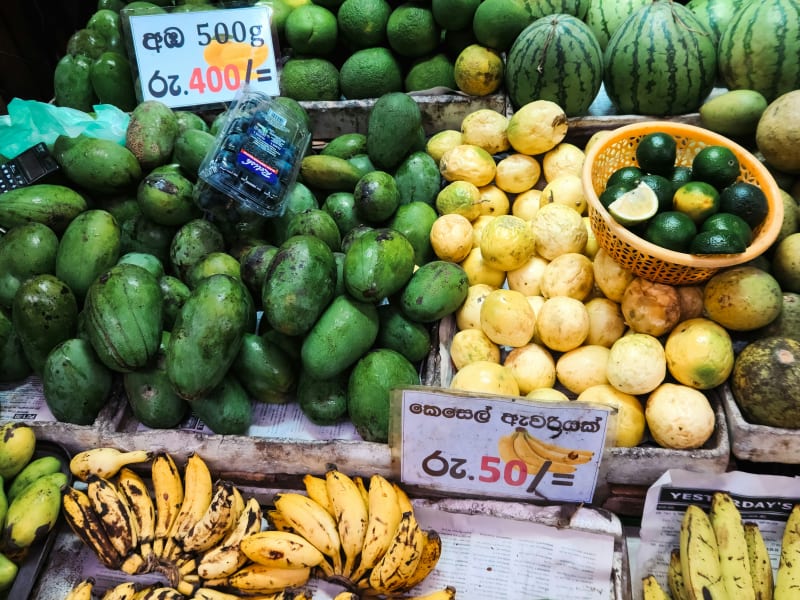
Other Tropical Fruits
A buyer-led route for additional Sri Lankan tropical fruits where exact commodity, form, source, phytosanitary conditions, pack and destination determine feasibility.
Explore product